
In England, “eloping” doesn’t mean what films suggest. You can’t run to a register office and marry on the spot. But you can plan a genuinely secret, legally valid, deeply personal wedding in under eight weeks — with two witnesses, a weekday slot, and no obligation to tell a soul. Here’s exactly how it works, including every risk you should know about before you start.
1. What “Eloping” Actually Means in England — Getting the Definition Right
The word “elopement” carries a lot of cultural baggage — runaway couples, midnight escapes, Gretna Green. In England in 2026, the practical definition is considerably less dramatic, but the spirit is the same: an elopement is a marriage conducted deliberately, privately, and usually without the knowledge or presence of most family and friends. It is a couple choosing to marry on their own terms, with minimal external involvement.
What it is not in England is spontaneous. Under the Marriage Act 1949, a minimum 28-day statutory notice period is legally required before any ceremony can take place. There is no way around this — no register office that will marry you same-day, no special licence available to ordinary couples, no fee that speeds up the process. An English elopement requires planning ahead. The privacy is real; the spontaneity is a myth.
Couples using the word “elopement” in the UK tend to mean one of three things:
1. The full secret: Getting legally married with only two witnesses, telling no family or friends beforehand — or ever, in some cases. A private legal act between two people.
2. The micro-wedding elopement: A very small ceremony (2–10 people) in a meaningful location, with immediate family or closest friends only — no extended guest list, no reception, no public announcement until after the fact.
3. The adventure elopement: A legal ceremony followed by — or incorporated into — a travel experience. A ceremony at a scenic register office in the Lake District, followed by walking the fells. A legal ceremony in Edinburgh followed by a drive through the Highlands. The location is intentional; the guests are absent.
All three are legally identical. This guide covers all three, with notes on where the risks and practicalities differ.
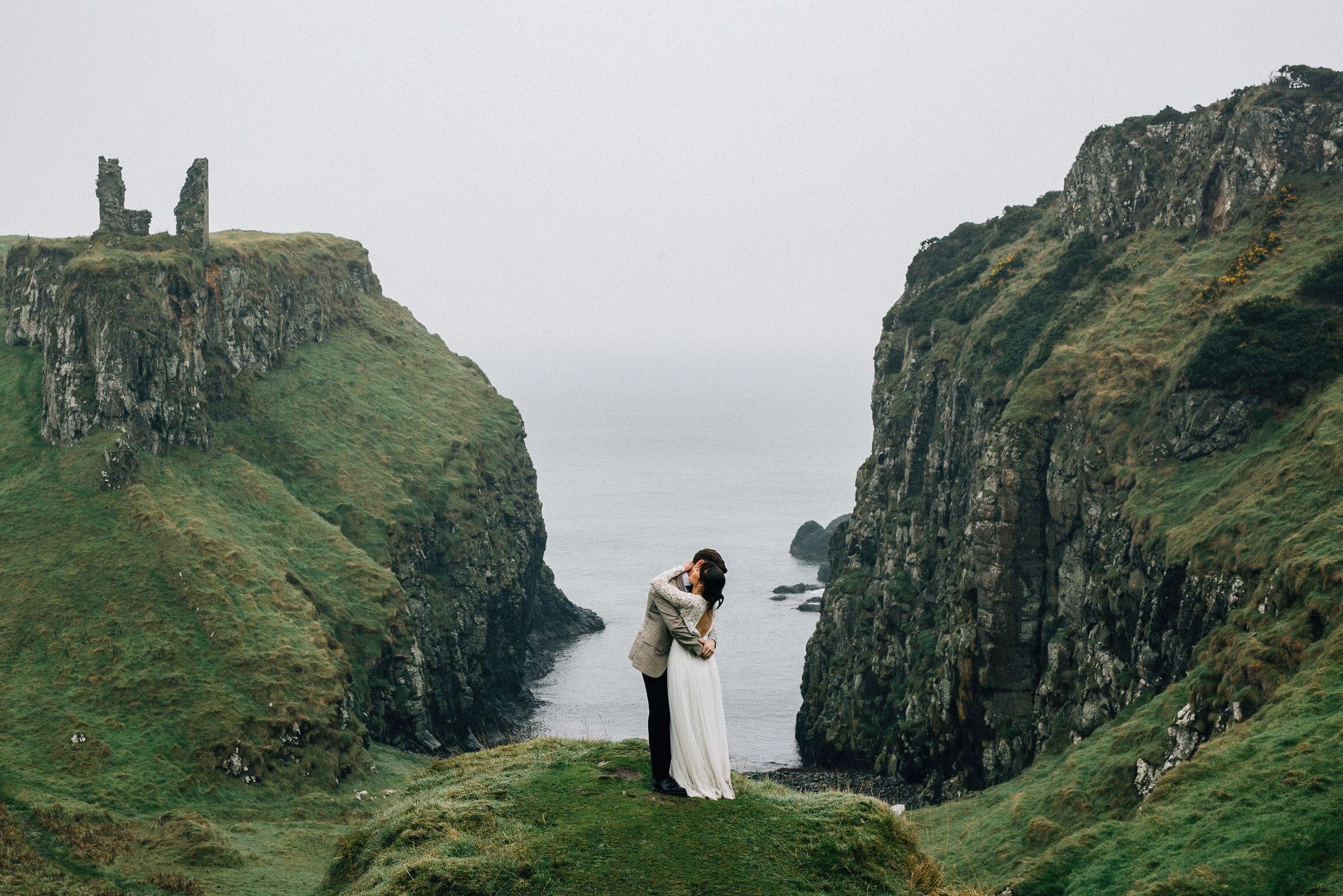
“We told people afterwards. Some cried — from joy, not hurt. Most said they were glad we did it our way. One of my aunts still brings it up at Christmas. She got over it.” — Real couple, r/UKweddings elopement thread (2024)
2. The Legal Process: Notice of Marriage in England Explained
Every legally valid marriage in England and Wales — elopement or otherwise — must go through the Notice of Marriage process before the ceremony can take place. This is not optional, not negotiable, and not waivable by any fee. Understanding exactly what it involves is the foundation of planning an elopement that works.
Book your Notice of Marriage appointment
You must give notice in person at the register office for the district where you currently live. If you live in the same district, you attend together. If you live in different districts, you each give notice separately at your own local office. Most offices allow online booking for the notice appointment. Typical availability: 1–2 weeks out. Book this as your first action — before venue, before guests, before anything else.
Give notice in person — what happens
The appointment takes 30–45 minutes. The registrar will ask you each to confirm your full name, date of birth, current address, nationality, occupation, whether you’ve been married or in a civil partnership before, and the name of the person you intend to marry. You sign a formal declaration. The fee is £35 per person, paid at the appointment.
Your notice is then publicly displayed at the register office for 28 days. “Publicly displayed” means it sits in a folder at the office — in practice, no one ever reads these. But legally, anyone with a lawful reason to object to the marriage (for example, if one of you is already married) has this period to raise the objection.
Book your ceremony slot — do this simultaneously, not after
While waiting for your notice appointment, and then during the 28-day period, contact your chosen register office or venue about ceremony availability. You can provisionally hold a slot before your notice period completes. Tell the register office: “We’re giving notice on [date], what slots do you have from [date + 29 days]?” Weekday slots are faster to obtain and almost always cheaper. If speed matters, flexibility about day of week saves weeks of waiting.
The ceremony — and you’re legally married
Your ceremony takes 15–25 minutes at a register office. Legal declarations (wording required by law), any personal vows you’ve added, two witnesses sign the register, registrar signs. Marriage certificate issued on the day. You’re legally married in England.
There is one mechanism that can bypass the 28-day notice period: the Registrar General’s Licence. It allows a marriage to take place with no advance notice when one party is seriously ill and not expected to recover — or is housebound and cannot attend a register office. It requires a medical certificate and is granted only by the Registrar General’s office. It is not a loophole for couples who want to elope quickly; it is a compassionate provision for end-of-life circumstances. Worth knowing exists — irrelevant to ordinary elopement planning.
3. Step-by-Step: Eloping in England in 2026
This is the operational sequence for a successful English elopement — not how it looks on a checklist, but how it actually plays out, in the right order, with the right priorities at each stage.
Decide: full secret, micro-wedding, or adventure elopement?
This decision affects everything that follows — particularly the witness question and the announcement plan. A full secret elopement (no one present, told afterwards) has different emotional and logistical risks than a micro-wedding with four people. Be honest with each other about what you actually want, before making any bookings. Changing your mind mid-plan causes real complications.
Gather your documents — start this on Day 1, not Day 20
You need: valid photo ID (passport or driving licence), proof of current address dated within 3 months (bank statement, utility bill), and if either of you has been previously married or in a civil partnership: the original Decree Absolute or dissolution order. A scan or photocopy is not accepted — the register office requires the original court document with raised seal.
If your Decree Absolute is lost or damaged, contact HM Courts & Tribunals Service for a certified replacement — current processing time is 3–6 weeks. This is the most common cause of elopement delays. Start immediately.
Book your notice appointment — this week, not when you feel ready
Go to your local council website, find the register office page, book a Notice of Marriage appointment. The slot will likely be 1–2 weeks out. Book now, gather remaining documents in parallel. Every week you wait is a week added to the end of your timeline.
Simultaneously: choose and enquire about your ceremony location
You give notice where you live but can marry anywhere in England and Wales. This is a significant creative freedom. A couple living in central London can give notice at their local register office and marry at a beautiful register office in the Cotswolds, a licensed hotel in the Lake District, or a coastal venue in Cornwall. Enquire about weekday slot availability as soon as you have a provisional notice date. For the most scenic or popular locations, good slots go fast.
Sort your two witnesses — the part most elopement guides undertreat
Every marriage in England requires exactly two witnesses aged 18 or over, present throughout the ceremony. For a secret elopement, this is your most delicate logistical and emotional decision. Your options: (a) ask two people who can keep a secret and won’t judge you for it, (b) for a truly private ceremony, ask two people with whom you have a close but boundaried relationship — perhaps colleagues rather than family, (c) in rare cases, register office staff have assisted with witnesses, but this should never be your primary plan. See Section 7 for full witness guidance.
During the 28-day wait: make it feel like yours
Submit music choices to the registrar at least two weeks before (no religious lyrics — check with the registrar). Prepare any personal vows to add around the required legal declarations. Book somewhere meaningful for afterwards — lunch, a walk, a hotel. If you’re having an adventure elopement, plan the day around the ceremony, not just before and after it.
The ceremony day: arrive early, bring everything, stay present
Arrive 10–15 minutes before your slot. Bring original photo ID. Your witnesses should arrive with you. The ceremony runs 15–25 minutes. Sign the register. Witnesses sign. Take your certificates. Then: go and enjoy the day you built, just for the two of you.
Telling people: have a plan before the day, not after it
The most underplanned part of any elopement. Whether you tell people immediately after, wait weeks, or only tell certain people — have a considered plan agreed between you before the ceremony. Deciding how to announce it in the car home, while emotionally flooded, leads to reactive decisions you may not be happy with. See Section 9 for a full breakdown of how couples handle this.
4. The Risks of Eloping in England — Every One, Honestly Assessed
Elopement guides often skip the difficult parts. This one won’t. Eloping in England carries real risks — legal, relational, emotional, and logistical — and understanding them clearly before you commit is the difference between a deliberate choice and a decision you regret. These are assessed honestly, not to discourage, but to inform.
Family relationship damage
The most commonly underestimated risk. Parents, siblings, and close family members who feel excluded from a wedding can experience real grief — not just surprise. The hurt is particularly acute for parents who expected to be present. This is not irrational; it is a natural human response to being excluded from one of the most significant moments in someone’s life.
This risk is highest when: the couple has close family they see regularly, the family had expectations of involvement, or cultural or religious traditions place strong emphasis on communal celebration of marriage.
Witness confidentiality failure
Your two witnesses know before anyone else that you’re getting married. If either witness tells someone — a mutual friend, a family member — before you’re ready to announce, you lose control of the narrative. In some families, this has led to genuine relationship damage: parents finding out from someone else that their child married in secret.
Witnesses chosen under pressure (“I need someone who can come Tuesday”) are less likely to take confidentiality seriously than witnesses who genuinely understand and support your choice.
Document problems delaying the timeline
Missing Decree Absolutes, expired passports, outdated proof of address — these are the most common causes of elopement delays. A couple who plans an 8-week elopement and discovers three weeks in that the Decree Absolute is missing can find their ceremony date pushed back by 6 weeks while a replacement is obtained.
Witness no-show on the day
A witness who commits and doesn’t appear means the ceremony cannot legally proceed that day. This is rare, but it happens — a sudden illness, a delayed train, an emergency. For couples with only two people attending, there is no immediate backup.
Notice display: someone sees it
Your Notice of Marriage is technically a public document displayed at your local register office for 28 days. In theory, anyone who visits the office could read it. In practice, this almost never happens — the notices sit in a folder, unstudied. However, if a family member happens to use the register office for another purpose during those 28 days, there is a non-zero chance they see your notice.
Post-ceremony legal admin regret
Name changes, will updates, pension notifications, tax changes — the post-wedding administrative list is longer than many couples expect. Doing this alone, without the logistical support of family who might help, can feel isolating. Some couples also find that not sharing the news immediately creates a strange emotional distance — the biggest thing in their lives is happening and they can’t talk about it.
Regret about not having certain people present
A number of couples who elope describe, months or years later, a quiet wish that one specific person had been there — a late parent, a sibling they’d drifted from, a grandparent who has since died. This is different from regretting the elopement itself; it’s specific, personal grief about the absence of one person.
“Is it really official?” — social recognition doubt
Some couples, particularly in the months after eloping, describe a low-grade social uncertainty — weddings that aren’t seen by others can feel less “real” to others, even when the legal reality is identical. This resolves, but takes time and usually requires a social event where the marriage is acknowledged publicly.
Sit with this question before booking anything: “Are we both eloping freely, or is one of us primarily doing this to avoid a conversation?” Elopements that happen because one partner doesn’t want the conflict of planning a big wedding together — rather than because both genuinely want a small, private ceremony — carry a much higher risk of post-ceremony resentment. This is worth an honest conversation before Day 1.
5. England vs Scotland for Eloping: The Real Differences
Scotland’s elopement reputation — built on Gretna Green’s historic role and a persistent idea that it’s “easier to marry there” — is partially myth and partially real. Here’s the accurate comparison.
If you want an outdoor ceremony — on a hillside, by a loch, in a woodland clearing — Scotland is the only UK nation where this is legally valid. A licensed humanist celebrant from Humanist Society Scotland can conduct a legally recognised ceremony outdoors almost anywhere in Scotland. This is a genuinely meaningful difference for couples whose vision of an elopement includes natural landscape rather than a building.
6. Documents You Need — The Complete Elopement Checklist
- Valid photo ID — original, not a copy or photo Current passport (strongly preferred) or valid UK photo driving licence. Both of you need this at your notice appointments. If your passport has expired, apply for renewal immediately — standard processing is 3 weeks, fast-track is available for an additional fee. An expired document is not accepted.
- Proof of current address — dated within 3 months UK bank statement, utility bill (gas, electric, water — not broadband), council tax bill, or HMRC letter. Must show your name at your current address. A forwarded-mail envelope, a friend’s address, or an old document is not acceptable. If you’ve moved recently and don’t yet have bills in your name: a letter from your employer on headed paper, or a bank letter confirming your address, is sometimes accepted — call the register office in advance to confirm.
- Decree Absolute — if previously divorced (original paper document only) The register office will not proceed without the original court-issued Decree Absolute with raised seal. A scan, email, or photocopy is not accepted. Lost it? Contact HM Courts & Tribunals Service (HMCTS) to request a certified copy — current processing: 3–6 weeks. Start this on Day 1 of your planning, not as an afterthought.
- Dissolution order — if previously in a civil partnership Same rules as Decree Absolute. Original document, not a copy. Contact HMCTS if you need a replacement.
- Death certificate — if widowed Original, with a certified English translation if issued in another language. Your local solicitor or a specialist translation service can provide certified translations.
- Biometric Residence Permit / valid visa — if non-UK/Irish national Check gov.uk to confirm whether you need a designated register office appointment. The 70-day waiting period (vs 28 days for UK/Irish citizens) means your minimum timeline is roughly 12 weeks rather than 6–8. Build this into your planning from the start.
7. Witnesses for Your Elopement — The Most Delicate Decision
The witness question is where elopement planning gets genuinely complicated. You need exactly two witnesses aged 18 or over, present throughout the ceremony. They will sign the marriage register. Their names will be permanently recorded alongside yours. And they’ll know before everyone else that you got married.
The Confidentiality Problem — Thinking It Through
The witnesses you choose become the holders of your secret. This is a significant trust. The question isn’t just “who’s available?” — it’s “who can genuinely keep this to themselves, without it weighing on them in a way that damages their relationship with your family?” Some people find keeping a significant secret from mutual friends or family members genuinely distressing. Putting someone in that position is worth considering carefully before asking them.
Witnesses who are deeply embedded in your family’s social network — a sibling of one partner who sees your parents weekly, a mutual friend who is close to both your mothers — carry the highest confidentiality risk. Not because they’re untrustworthy, but because they’re in daily proximity to the people who don’t yet know. Choose witnesses who are meaningful to you but have some social distance from your family, if full secrecy matters.
Your Witness Options for a Secret Elopement
- Close friends with social distance from your family A friend from a different context — a work friend, a university friend who lives elsewhere, a friend from a hobby group — who has no regular contact with your family. They can hold the secret without being put in impossible social situations.
- Each other’s chosen “one person” One close friend or sibling each, chosen specifically because they support your choice to elope and can be trusted with the secret. This is the most emotionally meaningful approach — your most trusted person is present for the moment.
- Work colleagues People who know you well but have no family connection. They’re unlikely to cross paths with your parents or siblings in a context where the secret might emerge. Works particularly well for couples who keep their work and personal lives somewhat separate.
- Fellow travellers or local contacts (adventure elopement) If you’re eloping in a specific location — the Lake District, Scotland, a coastal town — you may be able to arrange witnesses through local contacts, an elopement photographer (who is experienced in this), or accommodation hosts. This is genuinely done and keeps the witness pool completely outside your social network.
Many photographers who specialise in elopements are registered (or have partners registered) as professional witnesses. If you’re hiring an elopement photographer for your ceremony — which is worth considering, given how quickly and privately the day passes — ask explicitly whether they can serve as a witness or arrange a second witness. Several UK elopement photographers offer this as a standard part of their service. It solves the witness problem while keeping the ceremony entirely private from your social circle.
8. Venues for an Elopement Ceremony in England
Historic register offices — beauty at civil ceremony prices
Many register offices are housed in genuinely beautiful historic buildings — Chelsea Old Town Hall, Leeds Register Office in the Civic Hall, Winchester Guildhall, Oxford Town Hall. These offer architectural grandeur at civil ceremony prices (£46–£150 for the ceremony slot). Booking a weekday morning gives you an unhurried, intimate experience with minimal other couples around.
Rural register offices — quiet towns, beautiful buildings, fast availability
Small registration districts in areas like the Cotswolds, Yorkshire Dales, Dartmoor, and Lake District often have shorter waiting lists and lower ceremony fees than city offices. A register office in rural Cumbria may have a ceremony slot available within two weeks of your notice completing. The towns are quieter; the buildings often older and more characterful; the surrounding landscape part of the day.
Licensed venues — more setting, more cost, still elopement-scaled
Over 1,500 venues in England and Wales hold civil ceremony licences: country house libraries, walled garden orangeries, boutique hotel drawing rooms. A venue that normally hosts 150-person weddings can be booked for a ceremony of two and two witnesses — on a Tuesday in March, the cost is a fraction of the weekend rate, the staff are attentive, and you’re genuinely the only people there. Many licensed venues actively court elopement bookings in the off-season.
Scotland — outdoor and humanist options (England residents can marry here)
If you live in England, give notice at your English register office, and then travel to Scotland for the ceremony. You can marry in Scotland with a licensed Scottish celebrant — including outdoors with a Humanist Society Scotland celebrant, which is legally valid only in Scotland. A ceremony on a Scottish hillside, by a loch, or in a woodland is a genuinely different experience from anything legally available in England.
Coastal register offices and licensed venues — ceremony + landscape
Several coastal towns have register offices or licensed venues with sea views or walking distance to the coast. Whitby, St Ives, Padstow, Whitstable, Robin Hood’s Bay — the ceremony is inside the licensed building, but the day is built around the landscape. The ceremony is 20 minutes; the walk, the lunch, the sea air is the rest of the day you’ve created for yourselves.
✉ Telling Your People: How and When
How you announce an elopement matters almost as much as the elopement itself. The tone, the timing, and the medium all communicate something about how seriously you took the people being told. Getting this right doesn’t guarantee everyone will be happy — but it significantly affects whether people who are initially hurt can find their way to happiness for you.
Most UK couples announce by group WhatsApp or group text immediately after the ceremony — a photo, a simple message, and the news. This is fast, appropriate for casual relationships, and creates a shared moment. For closer family members — parents particularly — a personal phone call first, before any group message, is far more respectful. A parent who hears about their child’s marriage in a group chat, at the same moment as 40 other people, will feel differently from one who hears it first, privately, from you.
For those closest to you, a personalised physical card — sent the same day, or the morning after — turns the announcement into something lasting. It’s not a substitute for the conversation; it’s something they keep afterwards, long after the surprise has settled and the joy has taken its place.

Personalised Announcement Cards — For the People Who Matter Most
A physical card with your photograph — taken on the day, at your ceremony — sent to the people you most want to feel included in something they couldn’t be present for. Your names, your date, your words. A keepsake of a day they’ll now always be part of, even at a distance.
For parents and siblings who are initially hurt by the surprise: receiving something tangible and considered helps. It says the love is real, even if the logistics were private.
Browse Personalised Cards →10. Q&A: Every Real Elopement Question, Answered
Legally, yes — with one important caveat. You need two witnesses who must be over 18 and present at the ceremony, and they will know before your family and friends. Your Notice of Marriage is technically public (displayed at the register office), but in practice no one checks it. You have no legal obligation to inform family, friends, or anyone else. The two witnesses must know, but beyond that, the choice of when and how to tell others is entirely yours.
The legal minimum is 28 days after giving notice. Adding the typical 1–2 week wait for a notice appointment, the fastest realistic timeline is 6–7 weeks from decision to ceremony. To hit this: book your notice appointment this week, gather documents in parallel, enquire about ceremony slots simultaneously, and be flexible about weekday slots. Couples who insist on a Saturday slot at a popular office routinely wait 10–14 weeks. Flexibility about day of week is the single biggest factor in timeline length.
The notice is displayed at your local register office for 28 days, but in practice this means it sits in a folder that no member of the public actively consults. The chances of a family member seeing it by chance are very low. However, the risk is not zero — if a family member happens to visit the register office during those 28 days for another reason (a birth registration, for instance), they could potentially see it. This is rare, but it’s worth knowing the mechanism exists.
A marriage legally conducted abroad is generally recognised in England and Wales as valid, subject to conditions. The country where you marry must recognise the marriage as legal, both parties must have had capacity to marry at the time, and the marriage must not conflict with UK public policy (for example, polygamous marriages are not recognised). Popular destinations for overseas elopements that are legally recognised in the UK include Italy, France, Iceland, Ireland, and Denmark. Check specific country requirements before travelling — some countries require local documentation (certificates of no impediment) from the UK in advance.
You can withdraw your notice of marriage at any point before the ceremony takes place, without penalty. The £35 per person notice fee is not refunded, but there are no other legal consequences. If you’ve provisionally booked a ceremony slot, contact the register office or venue immediately — most have cancellation policies, and earlier notice generally means fewer fees. Changing your mind is your right; the system accommodates it.
Not with legal validity — not in England or Wales. All legally recognised civil ceremonies in England and Wales must take place within permanently registered buildings. Outdoor ceremonies are not legally valid, regardless of location or who conducts them. If an outdoor ceremony is central to your elopement vision, Scotland is your only UK option — humanist ceremonies conducted by Humanist Society Scotland celebrants are legally valid outdoors. Alternatively, some English couples do the 20-minute legal ceremony at a register office and then hold a meaningful personal ceremony or handfasting outdoors separately, without legal status, as the emotionally significant part of their day.
Absolutely — and many couples find this the best of both worlds. The legal marriage happens quietly, just the two of you and two witnesses, on your terms. Weeks or months later, you hold a celebration — a dinner, a party, a blessing ceremony — for family and friends. The celebration has no legal pressure attached to it, which often makes it more joyful than a traditional wedding reception. There is no legal minimum or maximum gap between the ceremony and any subsequent celebration.
This is the question people search for and rarely find answered honestly. Data is limited, but community accounts (including active threads on r/UKweddings and r/AskUK) suggest: couples who elope because it’s genuinely what both want report very high satisfaction. Couples who elope primarily to avoid conflict with family — without fully resolving their own feelings about the absence — are more likely to describe complex feelings afterwards. The most commonly reported regret is specific: not the elopement itself, but the absence of one particular person. If there is one person whose absence you know will haunt you, it’s worth asking whether they can be invited without changing what makes the elopement right for you.
📚 Sources & References
- UK Government — Marriages and Civil Partnerships (gov.uk)
- UK Government — Give Notice of Marriage (gov.uk)
- r/UKweddings — “Eloping” community discussion thread (real couple experiences)
- Marriage Act 1949 (England & Wales) — Notice requirements, ceremony requirements, witness rules
- Marriage (Scotland) Act 1977 — Scottish notice and ceremony framework
- Immigration Act 2014, ss.53–54 — Designated register office requirements for non-EEA nationals
- HM Courts & Tribunals Service — Decree Absolute copy request guidance
- Humanist Society Scotland — Licensed celebrant and outdoor ceremony information
To the Two of You
Choosing to marry quietly, on your own terms, without the noise — that’s not running away from something. That’s running towards each other, clearly, without distraction. Whatever your reasons, whatever your plan: we hope the day is everything you imagined, and that every day after it is built on the foundation you created together. Congratulations, in advance. ♡
